Short answer: an air conditioner does not consume refrigerant. It is a sealed loop, and the same charge is meant to circulate for the life of the equipment. So if your system is low, it is low for exactly one reason - it leaked. That is why a straight "top it off and go" is not a repair. It buys you a few weeks or a few months of cooling, the refrigerant goes back out through the same hole, and you pay for the gas again next summer.
Why a recharge on its own is not a repair
Refrigerant is the working fluid, not a fuel or a consumable like oil in a car. When a technician adds refrigerant without finding out where the last charge went, three things happen. You pay for gas that is going to escape. The underlying fault - a corroded coil, a leaking valve core, a rubbed-through line - keeps getting worse while it is hidden behind a temporary fix. And the compressor, which relies on returning refrigerant to cool itself, spends the whole time running hot and undercharged, which is one of the more expensive ways to shorten its life.
We quote the leak search and the repair as the job, and the recharge as the last step of it. If the leak turns out not to be worth repairing, we will tell you that before we put gas in, not after.
Signs your system is actually low on charge
- Air from the vents is cool but not cold, and the system never satisfies the thermostat on a hot afternoon.
- Ice on the copper line or the indoor coil. This is the classic one, and it is counterintuitive - low charge drops the coil below freezing, condensation freezes onto it, and the ice then blocks airflow and makes the cooling worse.
- Run times that keep stretching out. A unit that used to cycle now runs most of the day, and the bill follows it up.
- A hissing or bubbling sound near the indoor unit or the line set.
- Water where there was not water before, when a frozen coil thaws and overruns the drain pan.
Several of these overlap with problems that have nothing to do with refrigerant - a clogged filter, a failed capacitor, a dirty condenser, collapsed duct. That is the point of diagnosing rather than assuming; see AC repair in Dallas for how we work through the rest of the list.
Where North Texas systems actually leak
Leaks are not random. A handful of places account for most of what we find:
- The evaporator coil. Pinhole corrosion in the thin aluminium and copper of an indoor coil is common, and it tends to show up as a slow loss over a season rather than a sudden failure.
- Schrader valve cores at the service ports. Cheap, easily overlooked, and a genuinely good outcome when that is all it is.
- Brazed joints and flare connections, particularly at the condenser and at any point the line set was previously opened.
- Line set rub-throughs. Dallas-area homes very often put the air handler and the line set in the attic, where copper can chafe against a joist or a strap for years until it wears through.
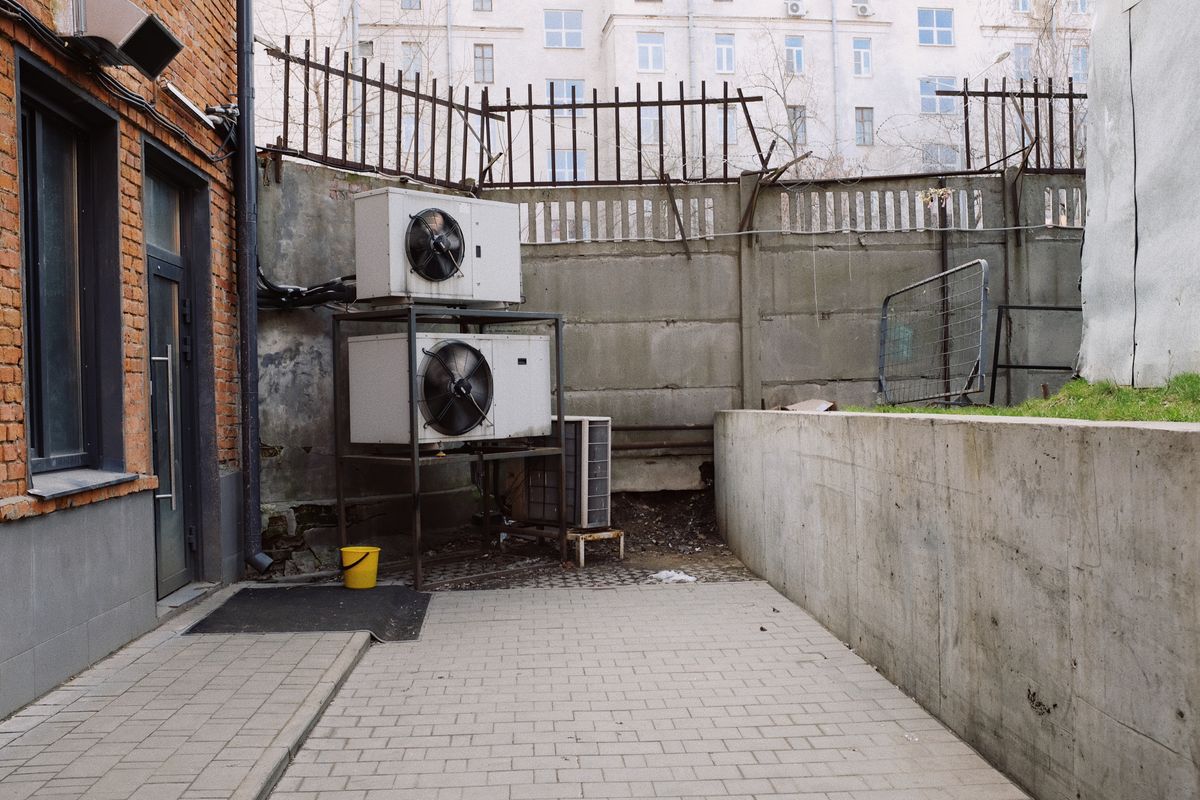
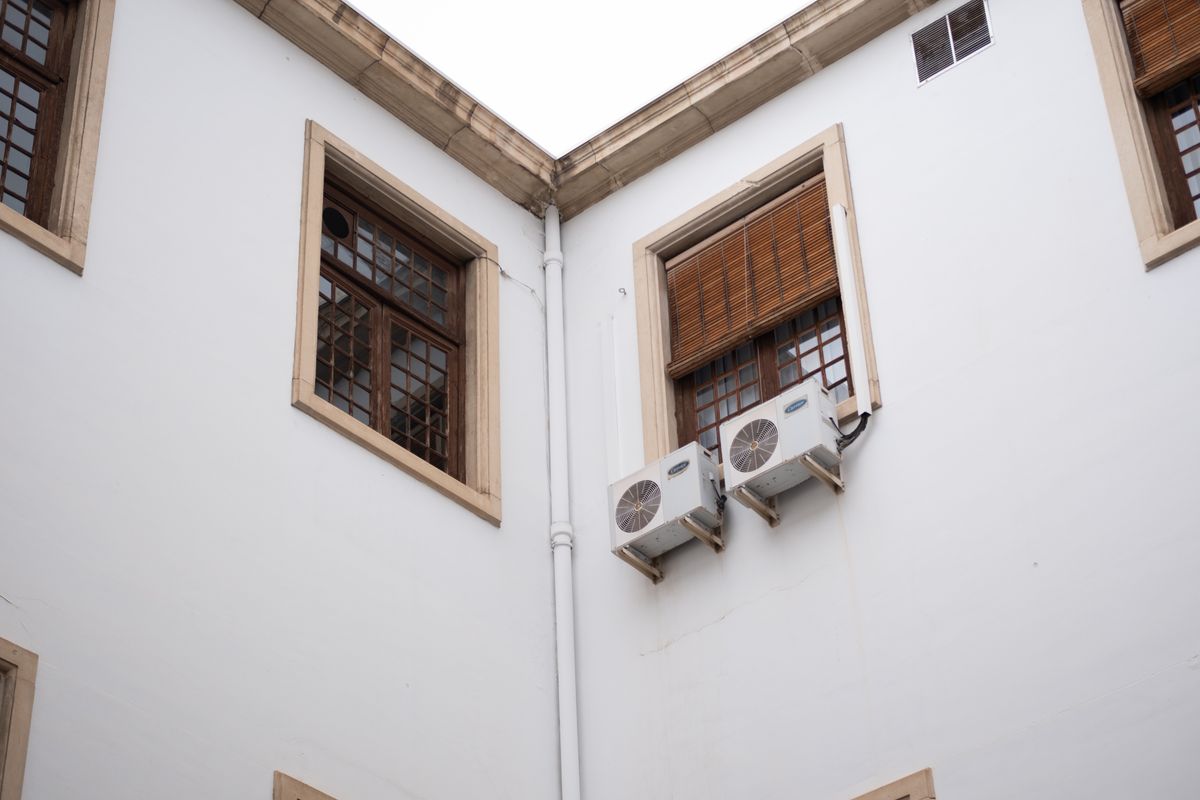
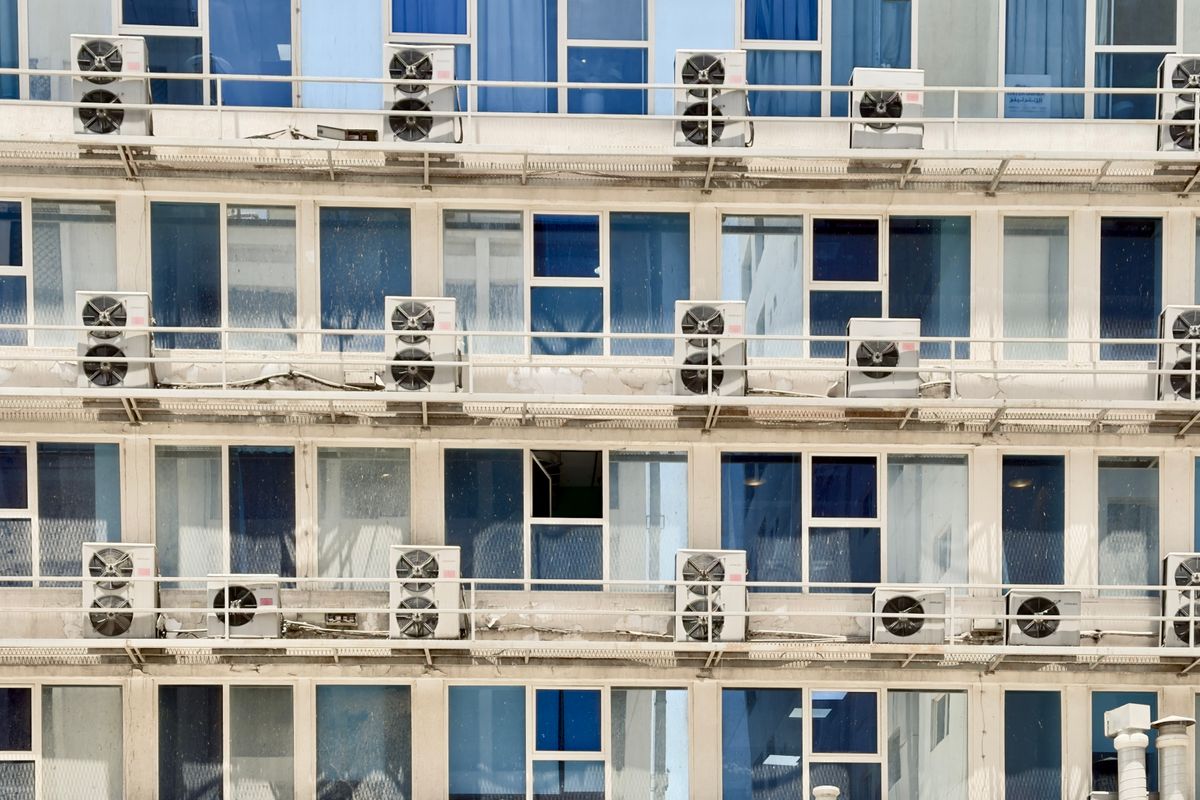
- Condenser coil damage outdoors - a string trimmer, hail, or a fin pack packed solid with cottonwood and dust.
Attic equipment is the local wrinkle worth calling out. A North Texas attic runs brutally hot for months, and heat, vibration and time are what turn a small contact point into a leak. It also means the leak is somewhere nobody looks until the cooling drops off.
How we find the leak and charge the system
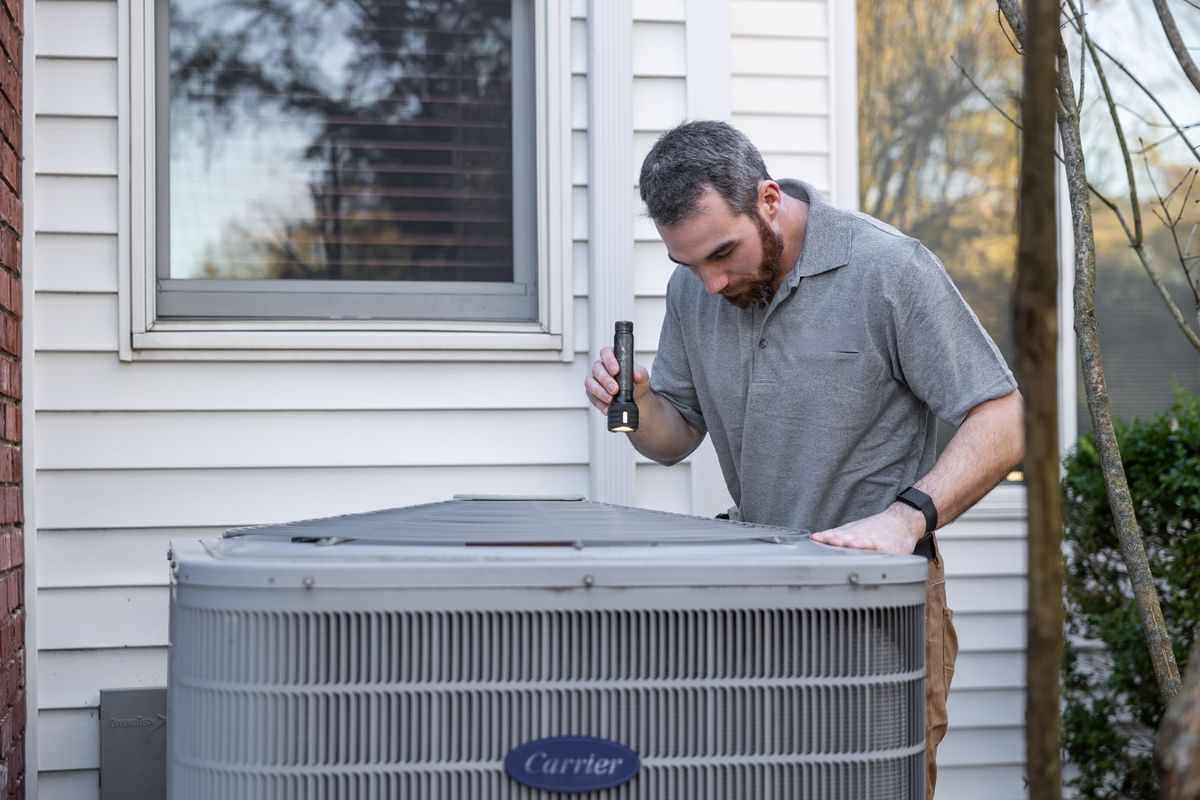
Finding a leak properly takes longer than adding gas, which is exactly why the quick version is so common. Depending on what the system is doing, we use a nitrogen pressure test to hold the sealed side and watch for a drop, an electronic detector to walk the coil and the joints, soap solution at the fittings, and UV dye when a slow leak needs to be caught over time rather than in one visit.
Charging matters just as much as finding the leak. After the repair we evacuate the system down to a deep vacuum - which also boils off moisture and non-condensables that would otherwise sit in the loop and cause damage - and then weigh in the charge to the manufacturer's specification for that model and line length, verifying superheat and subcooling once it is running. Charging by gauge pressure alone, in the heat, without weighing, is how a system ends up overcharged, which is its own way of killing a compressor.
While the coil is open we will usually recommend cleaning it, because a leaking coil is often a dirty coil too - that is coil cleaning, and it is far cheaper done at the same visit than as a separate trip.
R-22, R-410A, and the newer refrigerants
Which refrigerant your system uses changes the economics of this repair more than anything else.
If your equipment dates to roughly the mid-2000s or earlier, it likely runs R-22. Under the EPA phase-out, production and import of new R-22 in the United States ended on January 1, 2020. Existing systems are still legal to service, but the supply is reclaimed and recovered stock only, and it is priced accordingly. A large R-22 leak on an old system is usually the moment to have a straight conversation about replacement rather than repair.
R-410A systems are the bulk of what is in service now and are straightforward to repair and recharge. Newer equipment manufactured from 2025 onward has moved to lower-global-warming A2L refrigerants such as R-454B under the AIM Act, which are mildly flammable and carry their own handling and equipment requirements. None of this changes what we do at your house; it changes what we put in, and what it costs. We will tell you which one you have and what it means before you decide anything - and if replacement is on the table, AC installation and replacement covers how we size a system rather than just matching what was there.
Heat pumps are the same circuit, all year
A heat pump uses the same sealed refrigerant loop running in both directions, so a leak does not just cost you cooling in August - it costs you heating in January too, and the symptoms in heating mode look different enough that the charge often is not the first suspect. Reversing valves and defrost faults can also imitate a low charge. If your system heats as well as cools, heat pump service in Dallas is the page to start from.
When another recharge stops being worth it
There is a point where topping a system up each year quietly costs more than fixing it properly, and a further point where fixing it costs more than replacing it. The honest version of that decision comes down to a few things: how old the system is, which refrigerant it takes, whether the leak is in a repairable joint or in the coil itself, and how much of the charge it is losing per season. A valve core on a six-year-old R-410A unit is an easy repair. A leaking evaporator coil on a fifteen-year-old R-22 system usually is not worth it, and we would rather say so than sell you the same recharge every summer.
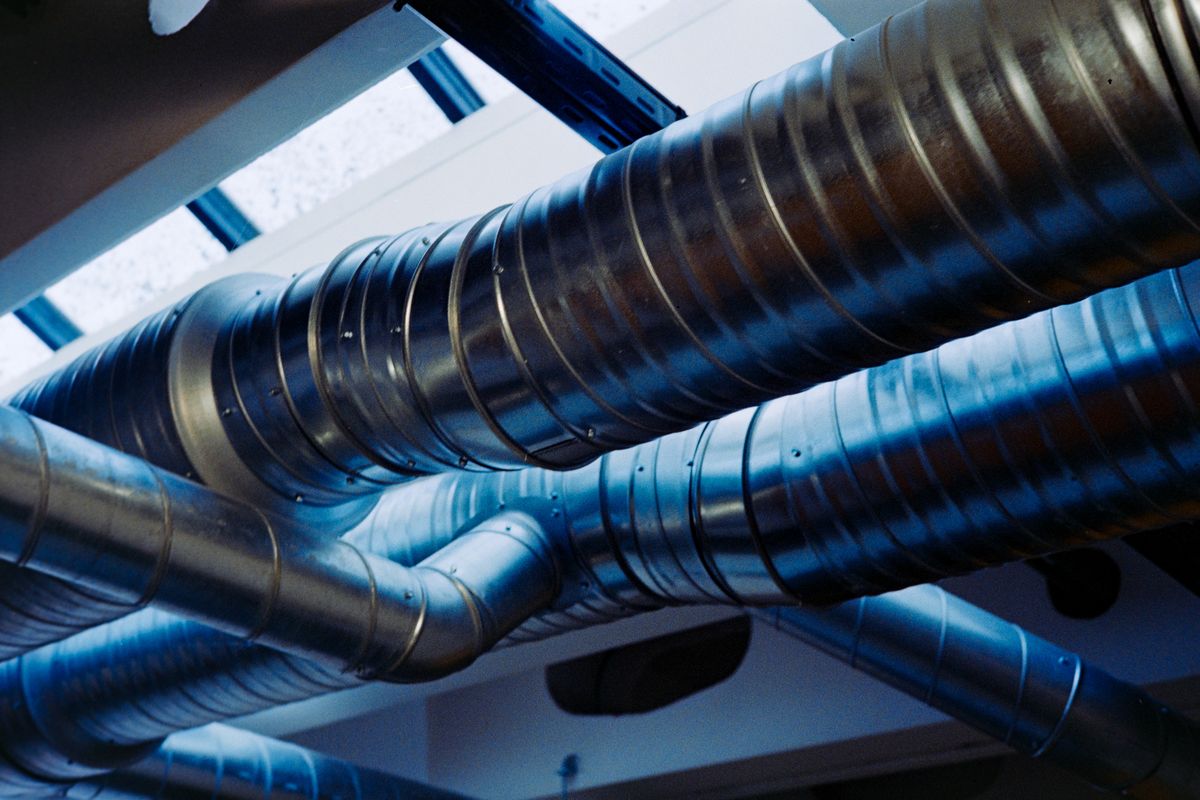
The best outcome, of course, is catching a slow leak while it is still a small one. That is a standard part of a seasonal AC tune-up, when the charge is checked against spec instead of against how the air feels. If you are already out of cooling and it is over 100 degrees, go straight to emergency AC repair - and if some rooms never cool no matter what the charge is, the problem may be delivery rather than refrigerant, which is ductwork repair and sealing. We serve Dallas and the surrounding metro.