Short answer: commercial HVAC in Dallas is mostly rooftop package units, and what separates a smooth service call from an expensive one is almost never the repair itself - it is access, scheduling and paperwork. The equipment sits on a roof nobody looks at, it serves people who are working underneath it, and above a certain refrigerant charge it carries obligations no house in this metro has. Those three facts drive nearly every decision below, and every one of them is easier to settle before something fails than during a heat run.
A rooftop package unit is a different machine, not a bigger one
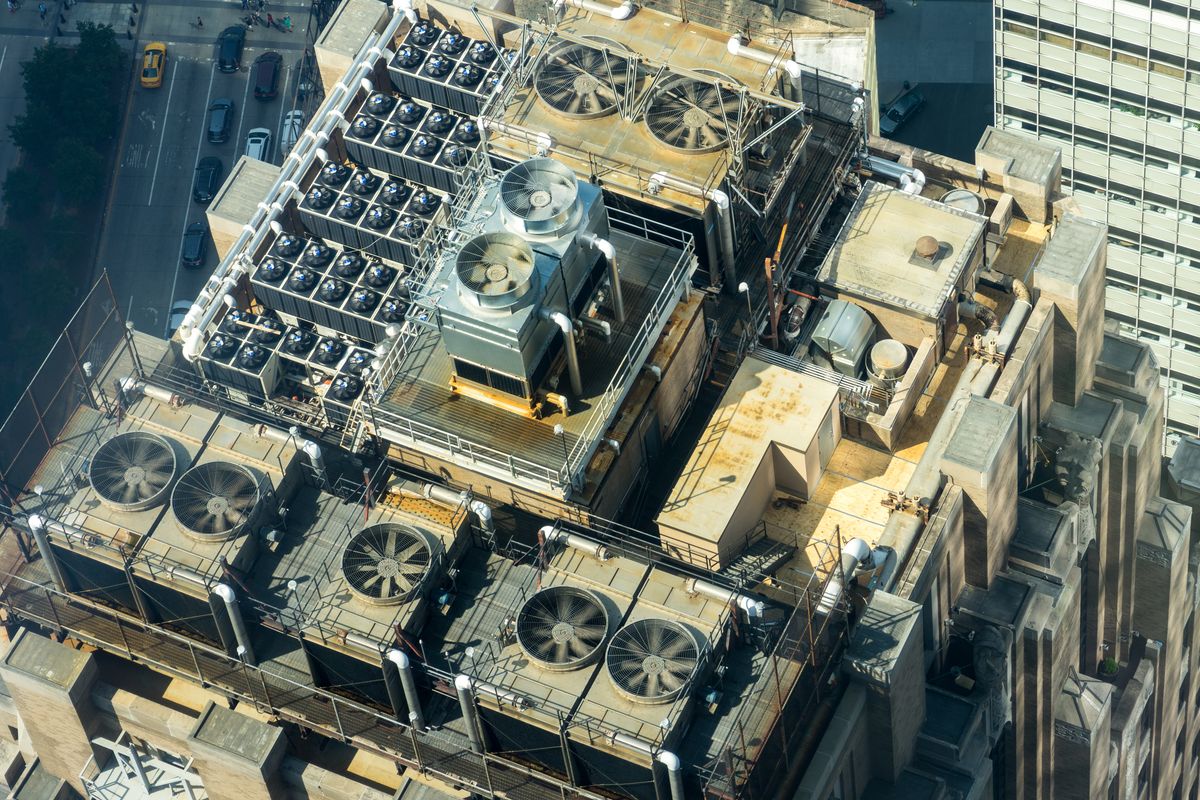
A house splits the system in two - compressor and condenser outside, evaporator and blower in a closet or attic. A rooftop package unit puts all of it in one cabinet on a framed curb, ducted straight down into the space below. That single structural difference changes what fails, how it is found, and what the finding costs.
- Belt-driven blowers. Plenty of rooftop equipment still turns the blower with a belt and sheave rather than the direct-drive motor a house uses. Belts glaze, stretch and shed, and a slipping belt quietly reduces airflow for weeks before it ever snaps. It is a consumable part, it is inexpensive, and it is one of the most common reasons a suite stops holding temperature with nothing actually broken.
- Economizer dampers. Most commercial equipment carries an outside-air economizer meant to pull in cool outdoor air when conditions allow and shut down when they do not. In North Texas the shutting-down half matters far more than the free-cooling half. A damper stuck part-open in July feeds triple-digit outside air into the return continuously, and the unit will run all afternoon without ever satisfying the thermostat while the utility meter spins. Linkages seize and actuators fail, and a tenant downstairs sees none of that - only a floor that never quite cools and a utility bill nobody can explain.
- Curb and penetration seals. The cabinet sits on a curb with a gasket between the two, and a decade of Texas sun, hail and thermal movement opens that joint. The first evidence is usually a stained ceiling tile that gets blamed on the roofer, when the water is arriving through the equipment curb or a supply-duct penetration rather than the membrane.
- Three-phase power. Most commercial tonnage runs on three-phase service, which brings failure modes no residential system has - a lost leg, a burned contactor pole, or a voltage imbalance across phases that cooks compressor windings gradually rather than suddenly. Reading all three legs and comparing them is a basic check and a frequently skipped one.
- Several units, not one. A floor is rarely served by a single machine. Answering a comfort complaint starts with knowing which unit feeds which zone, and that is information a surprising number of buildings have simply lost over successive tenants and contractors. Getting it recorded once is worth more than any single repair.
Access and scheduling are the real cost - and they are yours to control
On a house, the technician parks and works. On a commercial property, the same repair can stall for hours before a tool comes out, and it is nearly always one of the same handful of reasons. Sorting them out in advance is the cheapest thing a facilities contact can do.
Roof access is first: who holds the hatch or ladder key, whether the route runs through a locked stair or another tenant's space, and whether the building requires an escort. Second is authority - many multi-tenant buildings will not let anyone onto the roof without notice to management, and a lease frequently puts the rooftop unit serving your suite under your responsibility while the roof itself stays under theirs. Knowing which side of that line the failed part falls on before the invoice arrives prevents an argument later. Third is timing. Pulling a blower or a compressor over an occupied floor means noise, a hot space, and staff sitting under an opening. For offices along the Dallas North Tollway corridor and for restaurants near Deep Ellum and the Bishop Arts District, the honest answer is usually early morning or after close, and both of those cost more per hour than a mid-morning visit. Planned work is worth scheduling into that window deliberately; a failure in August will land in it whether you planned for it or not.
Restaurants deserve a separate note, because a kitchen is not a small office. Exhaust hoods move a great deal of air out of the building, and something has to replace it. When make-up air is undersized, out of service, or was never balanced against the hoods, the dining room goes negative - doors pull hard, the front of house never cools no matter how healthy the rooftop unit is, and grease-laden air gets dragged in from wherever it can find a path. That comfort complaint is genuinely not an air conditioning fault, and replacing the air conditioner does not fix it.
Service contract or call us when it breaks?
Both are defensible, and the honest way to choose is by consequence rather than by equipment. Ask what an unplanned outage actually costs on a given afternoon. For a warehouse or a back-office suite, a day at reduced comfort is an annoyance, and paying per call is reasonable. For a restaurant on a Friday night, a clinic, a server or equipment room, or a retail floor in July, one lost afternoon can exceed a year of scheduled maintenance - and at that point the contract is not really buying repairs, it is buying scheduled attention and a place in the queue during the weeks when every contractor in the metro is booked solid.
What a maintenance agreement genuinely delivers is the drift work: belts and filters on an interval rather than on failure, economizer operation confirmed while it is mild enough to test honestly, condenser coils cleaned before the load arrives, electrical connections checked, condensate paths cleared, and readings recorded so the second visit can be compared against the first. What it does not deliver is immunity. A fifteen-year-old unit under a contract is still a fifteen-year-old unit, and any agreement that implies otherwise is selling something it cannot supply. Ask exactly what is covered, what is billed separately, and whether after-hours response is included or merely available.
Refrigerant obligations change with charge size, and commercial is where that starts
A residential system in Dallas holds a handful of pounds of refrigerant. Commercial tonnage can hold considerably more, and once an appliance crosses the fifty-pound mark it sits under federal requirements around leak repair, verification and recordkeeping that smaller equipment does not carry. Exactly which of those provisions apply has moved with successive EPA rulemakings and depends on the refrigerant in the system, so the useful thing is not to memorize a threshold - it is to know your charge, which is printed on the equipment data plate, and to ask your contractor plainly which rules apply to your units and who is keeping the records.
The practical version is simpler. On a system of that size, repeatedly adding refrigerant without finding the leak is both the expensive path and the one that puts the paperwork on you. A leak search, a documented repair, a verification that the repair held, and a charge weighed in to the manufacturer's specification is the sequence that ends the problem. Being told a large unit "just needs topping up" every season is a signal to ask what the measured leak rate is and what was done about it.
What to have ready when you call
Five things turn a diagnostic visit into a repair visit, and all five are free. Which unit is affected and which area it serves, ideally by the tag on the curb. The nameplate details - manufacturer, model, serial, tonnage and refrigerant type - photographed once and kept somewhere findable. Who to call for roof access outside business hours. Whether the unit is on your lease or the landlord's. And what was done last time, by whom. Buildings that keep those five things current get faster repairs and fewer repeat visits than buildings that do not, and the reason is not mysterious: the technician spends the first hour working instead of looking.