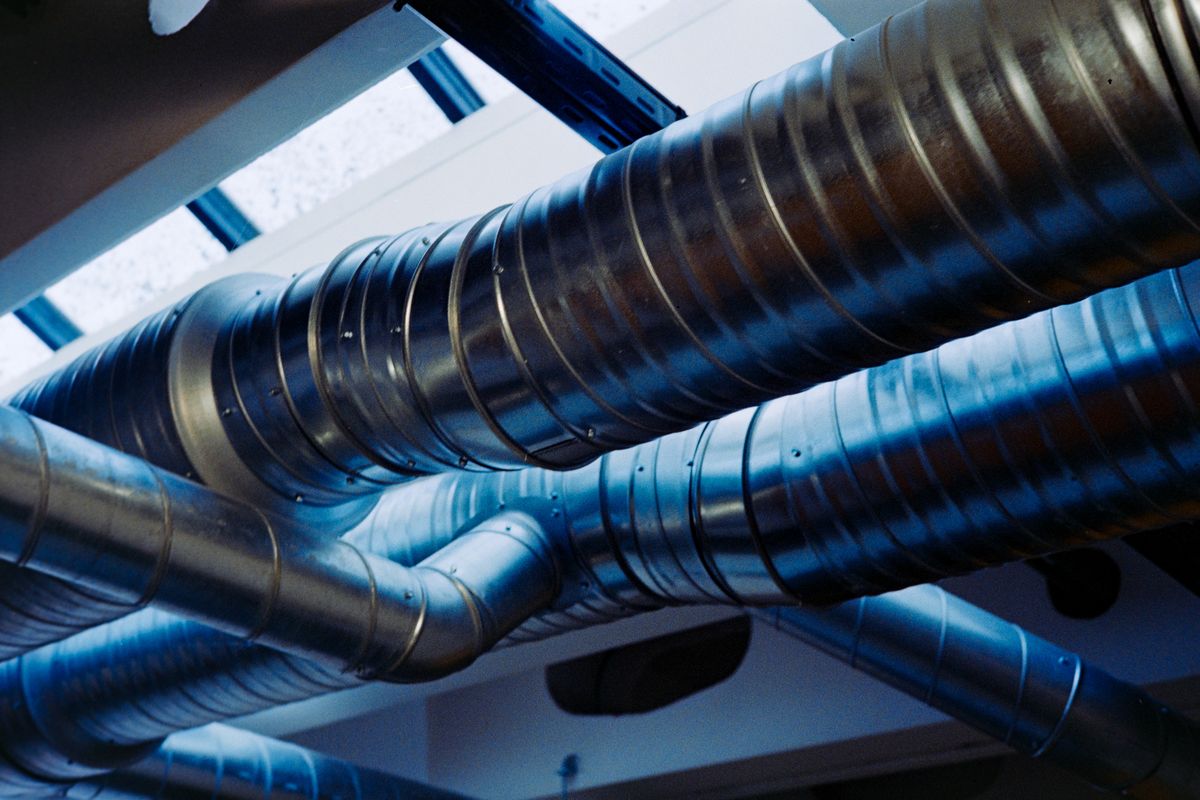
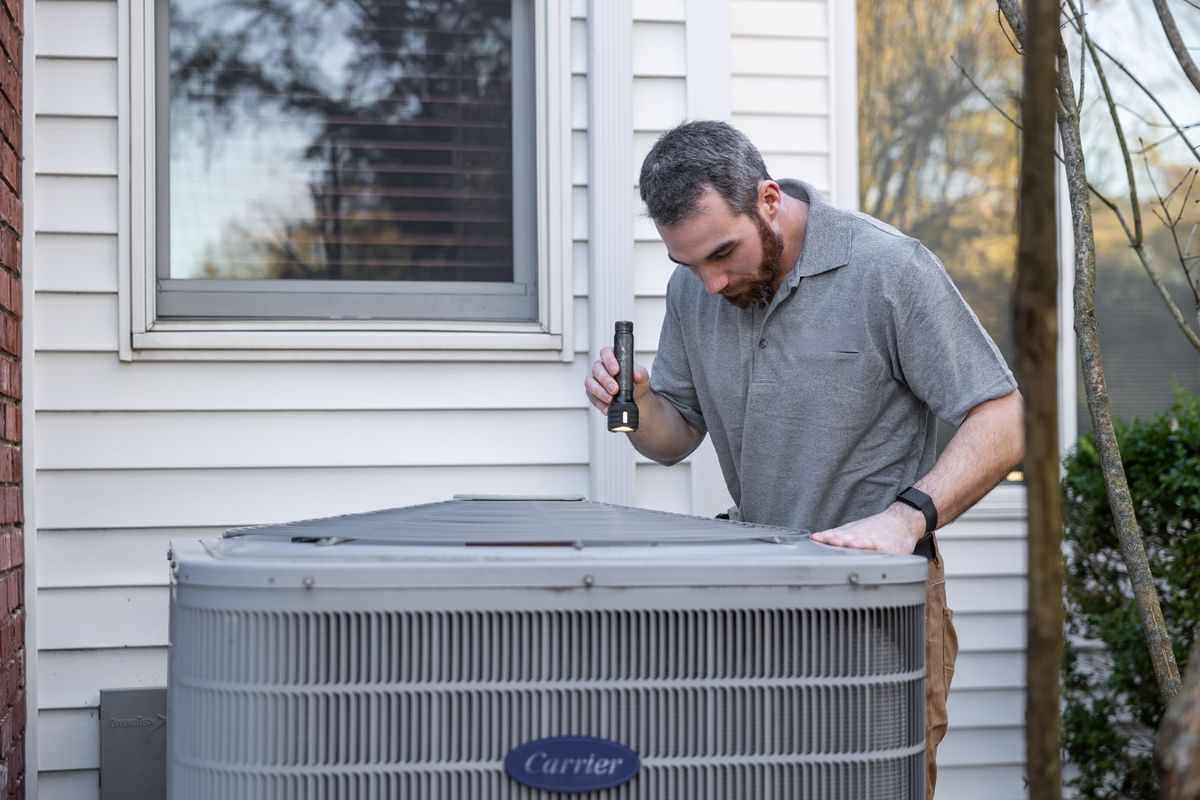
Short answer: when rooms in a Plano home never cool evenly, the answer is usually not the air conditioner itself - it is the ductwork hidden above it. The machine can be perfectly healthy and some rooms still stay warm, because conditioned air is escaping into the attic or never reaching its destination through a duct system designed for a different house. In Collin County, where Plano sits under an attic that can hit 140 degrees on an August afternoon, a handful of feet of unsealed or sagging flex can cost you hundreds of dollars a summer. If a room that used to stay cool has gone warm, or one never cooled since you moved in, the conversation belongs here before anyone spends money on a bigger mechanical fix.
The order we actually see duct failures in Plano homes
If you are chasing a hot room in Plano, the first place we look is not the thermostat - it is the ceiling. The reason is simple: a room that reads warm while the rest of the house stays comfortable almost always comes down to airflow, and airflow comes down to the duct run that feeds that room. Here is the sequence we see, in the order of frequency:
- The supply boot has come loose. This is the collar where the flexible duct connects to the ceiling vent. It is a friction fit held by a couple of screws and some tape, and over time the heat cycling in the attic works it free. When it does, the air that was supposed to go to that room dumps into the attic instead - and the room stays warm while the attic gets cool air it does not need.
- The trunk line has a seam that opened. The main duct trunk is sheet metal joined with screws and sealed with tape. That tape, installed decades ago, dries and cracks in an attic that regularly sees 130 degrees. When a seam opens, the biggest runs of the system lose air before it even reaches the branch ducts.
- A flexible run has sagged or been crushed. Flex duct must be supported every four to six feet to keep its round shape. Without proper supports it sags between the joists - and when the liner collapses even partially, airflow drops sharply. In homes that have had attic work done, later trades walking the joists have also stepped on and crushed runs flat.
- The return air path is blocked or undersized. Every system needs to pull air back to complete the circuit. A return grille covered by furniture, a door left closed in a room without its own return, or a return duct that is too small for the system will starve the entire house of circulation, not just one room.
- Insulation has degraded on the runs. Duct insulation from the 1980s and 1990s was often thinner than code now requires, and in an attic that sees temperature extremes, that older jacket loses its R-value. The duct absorbs attic heat, warming the air before it reaches the vent.
All of these present the same way from the living room - uneven cooling, warm spots, the system running longer than it should. What makes them hard to diagnose without an attic visit is that none of it is visible from inside the house. If that sounds familiar, the troubleshooting guide for a Dallas AC that is not cooling covers the unit-side checks, but when every vent is open and the airflow still falls short, the ductwork is the likely culprit.
Why the attic over Plano homes is the real enemy
A typical August day in North Texas puts the attic temperature at 130 to 140 degrees - which means the air inside the ducts, trying to deliver 55-degree cooling, is in direct contact with a surface hotter than the inside of an oven. That thermal gradient does three things: it heats the air before it reaches the room, it causes the duct materials to expand and contract so aggressively that sealed joints work themselves loose over time, and it bakes the tape and adhesives used in older installations until they fail completely. In Collin County, where Plano is, that means a duct system installed twenty years ago is running against materials that were never designed to last in this environment.
That is why our approach starts with measurement, not assumption. We pull static pressure readings to see whether the distribution is actually choking the blower, check the return path for restriction, and measure airflow at each supply vent. When our measurements show the ducts are the culprit, not the equipment, that is where we focus our work: sealing the leaks, because a service call on the unit alone will not stop conditioned air from vanishing into the attic.
Plano's east and west sides fail differently
US Highway 75 runs north to south through the center of town, and the two halves of the city were built in different eras for different buyers - which means the ductwork on each side fails for different reasons. East Plano, the neighborhoods that grew up around the old town center and the 1960s-through-1980s subdivisions, was built when duct design was less rigorous and return air paths were often an afterthought. Those homes are now forty to sixty years old, and their ductwork has settled and separated under decades of thermal cycling. The failures here are structural: boots that have slipped off their connections, trunk seams that have opened from decades of heat expansion, and flex runs that have sagged so far they are kinked flat.
West of the highway, around Legacy, the Tollway, and the Willow Bend area, the homes are newer - mostly 1990s and 2000s construction. The ductwork was sized more carefully, but the failure mode is different. Here it is about balance and zoning. Long runs feeding upstairs bedrooms, zone dampers that have started to stick after years of use, and returns that were never balanced room to room leave certain spaces perpetually short on airflow. When one specific upstairs room stays warm while the hallway stays cool, that is almost never a broken system - it is a damper or a balance issue on that one run.
The newer west-side homes are also more likely to have zoned systems, which adds complexity that can masquerade as a major failure. A damper motor that has failed in the closed position, a zone control board that has gone dead, or a smart thermostat wired without a common wire on a zoned system can all behave erratically in ways that look exactly like a dying air conditioner. We trace the damper line and the control board first, because replacing a thermostat or a capacitor will not fix a distribution problem hiding behind a zone.
Plano ISD is really three markets under one name
Plano ISD is served by three senior high schools - Plano East, Plano West, and Plano Senior - and the catch basin of each tells you what era the homes were built in, which is the first clue about what kind of duct failure to expect. The east-side schools feed neighborhoods that were developed in the first wave of Plano's suburban growth, where homes still carry original 1970s and 1980s flex duct and sheet-metal trunks that have never been resealed. The west-side schools cover the newer construction, where the ducts were sized honestly to the houses but where zoning dampers and smart thermostats added a decade later are now the new source of trouble. We read the address before we read the thermostat, because the neighborhood determines which problem we expect to find.
Why tape fails and what actually holds in a Plano attic
When a duct seal fails, it almost always does so in the first really hot week of summer - that is when the Plano attic hits its peak and whatever material was used either holds or lets go. The right materials and the wrong ones diverge on exactly that test. Standard duct tape dries, shrinks, and peels when the attic hits 140 degrees - relying on it is how a "repair" fails within a season or two. The materials that withstand a Texas summer are the ones the trade moved to years ago. Our sealing approach starts with a fiber-reinforced mastic compound applied by brush. This material grips metal, flex, and collar joints and does not harden or crack when the Plano attic swings from sub-freezing to over 140 degrees in a single day. We pair it with UL 181 foil tape for the flexible duct joints - the tape the code requires for the temperature ranges and joint types found in North Texas attics. When a run has slipped off its boot, we pull it back onto the collar and seal it properly - not just wrap tape around a loose joint. And where a run has sagged, adding the hangers that keep it from settling again is what makes the repair last, not require another trip.
We do not push duct cleaning as a substitute for a real seal-and-repair job in Plano. Blasting a filter-pack and vacuum through the system does not constitute a repair, and on a Plano home powered by Oncor the waste shows up every month - a system that leaks while it runs keeps losing the cooling you already paid for, season after season. Sealing the leak is what stops the loss running through your meter; cleaning alone leaves the actual fault untouched.
We sort repairable damage from replaceable damage on the spot, and lay out the price before any work begins. A collar that has pulled away from its boot, a metal seam that has split open, or a flex run that has settled enough to kink can all be fixed in a single visit. However, a run that has been flattened by foot traffic, has a torn inner liner, or is kinked to the point where airflow stops entirely is past saving - that segment gets replaced, and replacing a single run is a small, contained job, not a reason to dismantle the entire system.
The harder call is when the entire system stops being worth patching. That point arrives on Plano homes where the ductwork is old, undersized, and has been leaking for years - or where a larger air conditioner was installed on ducts sized for the original, smaller unit. Stopping up the individual leaks on a system like that fixes this season's waste but leaves the underlying mismatch in place, and the honest conversation turns toward redesigning the distribution. When we reach that recommendation in Plano, we show you the exact numbers from our static-pressure and airflow tests rather than asking you to take our word for it, and our AC installation in Plano page walks through the sizing and the changeover.
Plano permits and the city inspection process
Mechanical work in Plano is overseen by the city's Development Services and Building Inspections office, and a duct repair or replacement that involves modifying the return plenum or the main trunk typically pulls a permit before work begins. That is worth knowing because a permit-backed job brings a city inspection at the end - a second set of eyes that confirms the repair was done to code and to the measured static pressure that the system is designed for. We schedule that inspection alongside the repair itself so there is no second trip or surprise, and we handle the paperwork rather than leaving it for a homeowner to figure out after the fact.
That matters especially on a replacement job. If we are swapping out sections of trunk or rerunning a supply line from the air handler, the new work has to be sized to the actual airflow the system delivers - not to the nominal tonnage on the nameplate. A duct that is too small for the blower it feeds is a repair that creates a new problem, and the inspection is what catches it before the drywall goes back up.
Two-story homes and the upstairs complaint
Plano has a great many two-story homes, and cooling one reliably comes down to how the air is shared between levels rather than what the machine downstairs is doing. Heat rises and the thermostat sits on the first level, so the rooms that feel it most are the bedrooms above - especially the ones at the far end of long attic runs where the ductwork has picked up heat before the air ever reaches the vent. We trace that path before we touch any equipment, because the most common fix in this city is a damper adjustment or a sealed run in the attic, not a new compressor or a bigger unit.
What a Plano duct repair visit looks like from start to finish
We approach a duct repair in Plano differently from how it was done twenty years ago. Instead of climbing straight into the attic, we start with measurements: a static-pressure reading to see whether the ductwork is restricting the blower, an inspection of the return path and its grilles, and airflow checks at each vent to find which rooms are short. Only after we have the data do we open the attic access and trace the specific runs the measurements flagged - loose boot collars, open trunk seams, and sagging or crushed flex lines. That way we are not chasing guesses in the dark, we are fixing the fault the airflow readings already pointed at.
When you have lived in your Plano home long enough to notice that some rooms never quite reach the temperature you set, or when a bedroom that used to stay cool suddenly feels like a sauna, the source is almost always hiding above the ceiling. That is where we look first, and where we fix it. Reach out for a duct inspection and we will give you a straight, upfront quote before any work starts. If your system has completely stopped cooling instead, start with AC repair in Plano, or emergency AC service in Plano when the heat is on and you need cooling back now.